
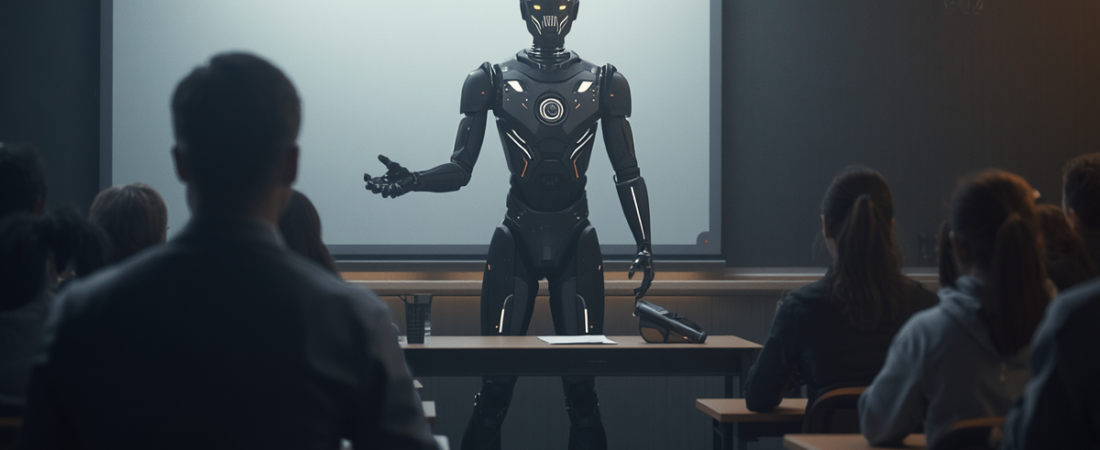
Whether we want it or not…
It is an inevitable truth to see that AI has been changing the society we know. More access to knowledge, more information, opportunities- they all have the common ground now for the Average Joe: Just ask AI to help you.
But, where does the educational system stand? Is it adapting? Is it even pushing for a reform? We could see the big players “catch the wave” and go for it: the US and China integrating LLMs into everyday education, trying to blend the two worlds: the machine and the critical thinking.
However, this transformation is not happening equally everywhere. While some nations are exploring how to use AI as a tool for improving education, many others are still struggling with outdated curricula, limited resources, and educational structures designed for a different era. The question is no longer whether AI will influence education, but whether societies will prepare their citizens to use it effectively or allow the gap between those who can adapt and those who cannot to grow even wider.
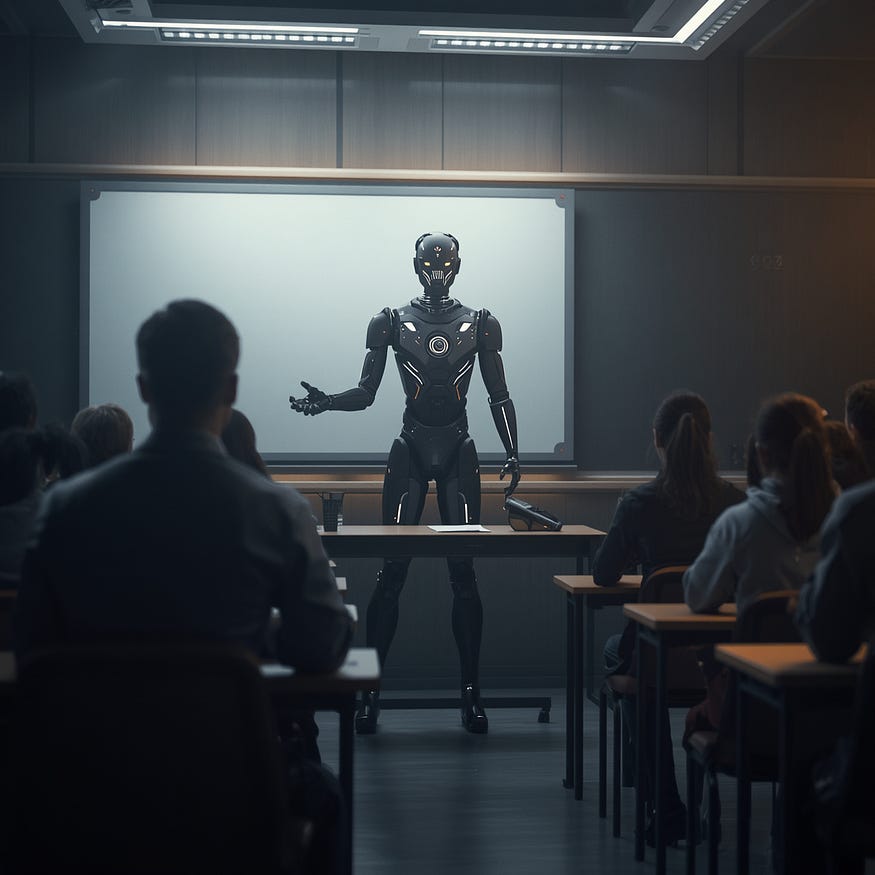
However, avoiding AI is not a solution. The longer educational systems delay adaptation, the larger the gap becomes between nations that prepare their students for the future and those that continue relying on methods created for the past. The danger is not only economic; it is also social. Entire generations may enter a world dominated by artificial intelligence while lacking the skills needed to understand, control, and create with these technologies.
This is why educational reform must go beyond simply adding computers or introducing AI applications into classrooms. True reform requires a complete rethinking of what education is meant to achieve. Memorization and repetition, once valuable skills in an information-limited world, cannot remain the foundation of learning when information is available instantly. The focus must shift toward creativity, analytical thinking, collaboration, problem-solving, and the ability to continuously learn.
Teachers will remain at the center of this transformation. AI should not replace educators; instead, it should enhance their ability to personalize learning, identify student difficulties, and provide better support. But this requires investment in teacher training and a clear understanding that technology is only as effective as the people and systems using it.
Without strong organization, long-term planning, and political commitment, educational reform will remain a collection of isolated experiments rather than a meaningful transformation. The countries that succeed will not necessarily be those with the most advanced technology, but those capable of creating systems that combine technology with human potential.
The next generation will inherit a world where adapting is no longer an advantage — it is a necessity. Education must prepare them not only to use the tools of the future, but to shape the future itself.
The role of the student must also change. For generations, education has often been built around the idea that success comes from remembering the greatest amount of information and reproducing it accurately. While knowledge remains important, the nature of knowledge itself has changed. When almost any fact can be accessed within seconds, the ability to ask the right questions, evaluate information, and apply knowledge becomes far more valuable.
The students of the future will not compete with AI by trying to become machines themselves. They will succeed by developing the qualities that make human intelligence unique: imagination, ethical judgment, emotional understanding, curiosity, and the ability to create new ideas. AI can provide answers, but it cannot replace the responsibility of deciding which questions are worth asking.
This requires a fundamental shift in how learning is measured. Traditional exams based mainly on memorization may become increasingly outdated in a world where information retrieval is no longer the main challenge. Education should instead place greater emphasis on projects, problem-solving, teamwork, research, and real-world applications. A student should not only be able to repeat what they have learned; they should be able to use that knowledge to build, improve, and innovate.
At the same time, societies must be careful not to create a generation that becomes dependent on AI rather than empowered by it. The purpose of integrating artificial intelligence into education is not to make learning easier by removing effort. The purpose is to make learning deeper by allowing students to explore ideas that were previously difficult to access. A calculator did not eliminate the need to understand mathematics; similarly, AI should not eliminate the need to think.
The challenge for education systems is finding the balance between embracing technological progress and protecting the human elements of learning. A classroom of the future should not be a place where students simply interact with machines, but a place where technology allows them to become more creative, independent, and capable.
The decisions made today will shape the abilities of future generations. If education systems successfully adapt, AI can become one of the greatest tools ever created for expanding human potential. But if reform is delayed, the same technology that could reduce educational inequality may instead become another force that increases it.
The future of education is not a choice between humans and machines. It is a question of whether humans are prepared to work alongside machines.